




2863
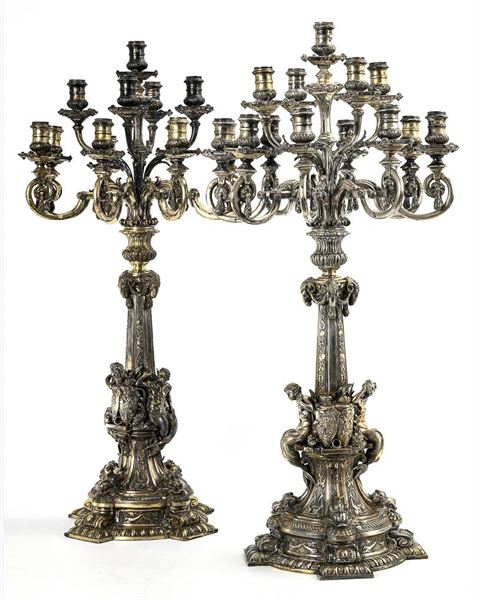
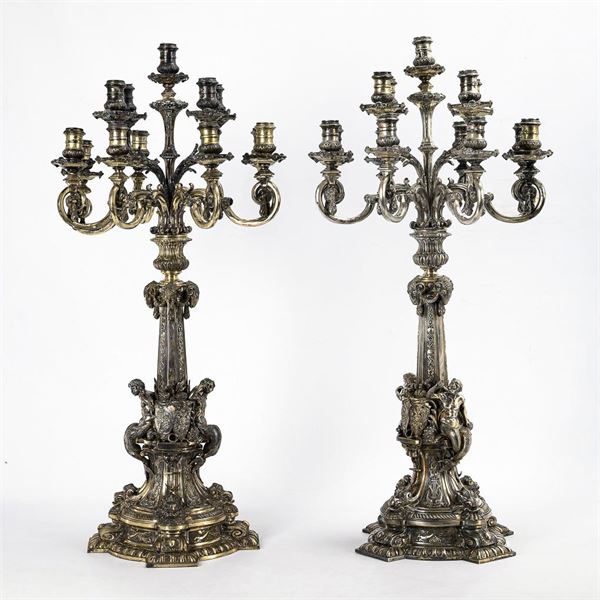
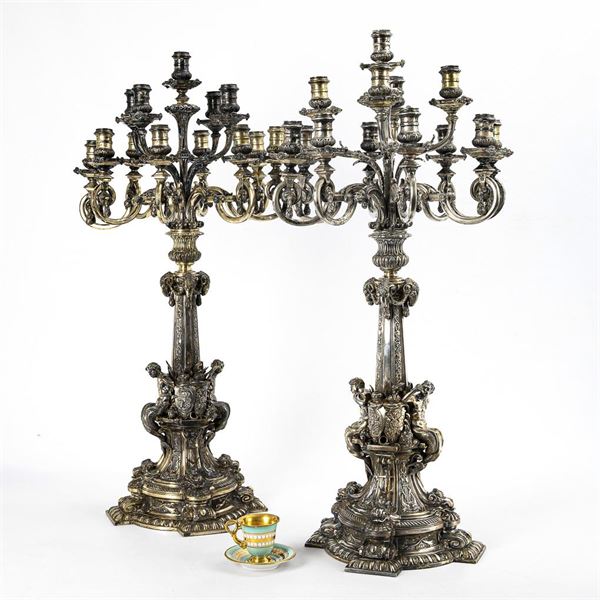
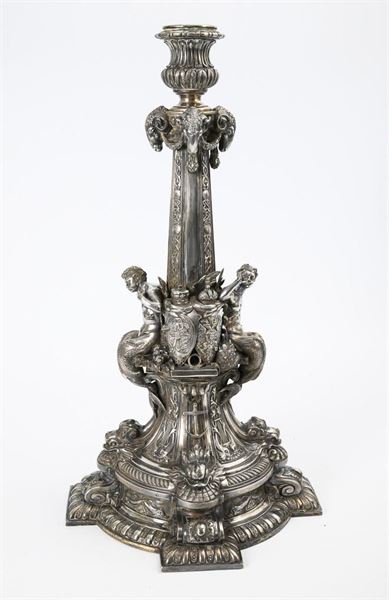
Pair of royal Victorian silver candelabras—part of a wedding gift to Alfred, Duke of Edinburgh, and Grand Duchess Maria Alexandrovna of Russia. Master Robert Garrard II, London.
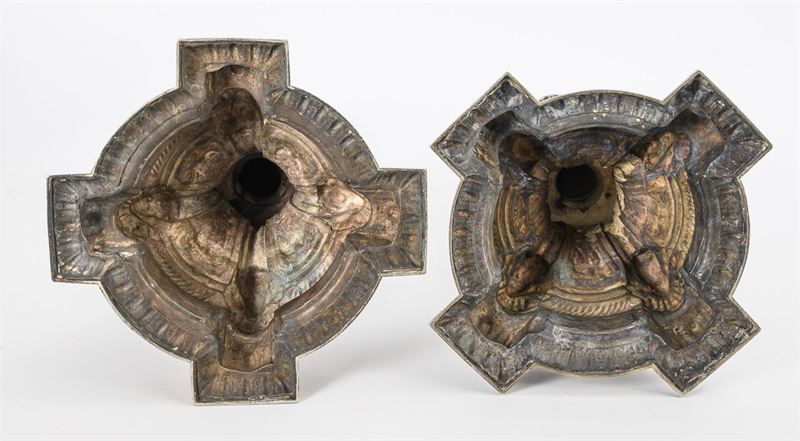
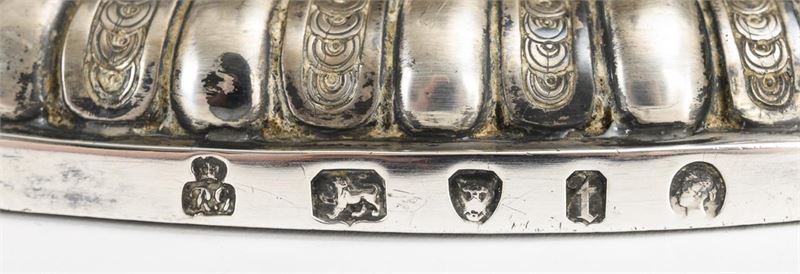
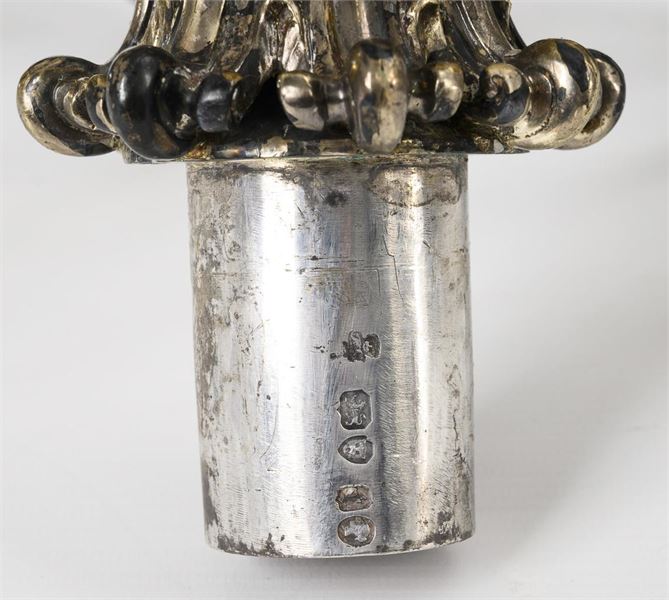
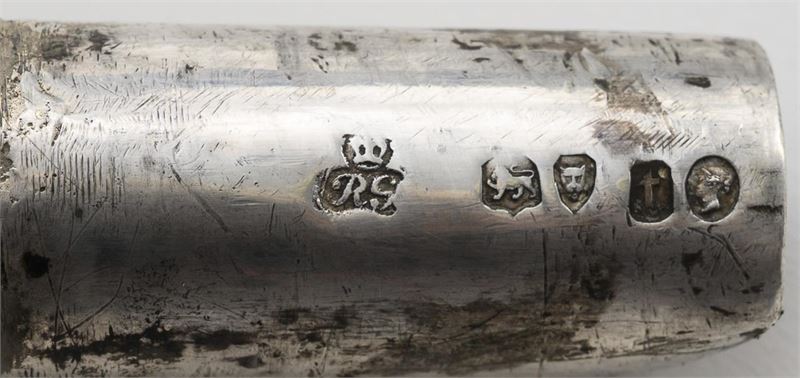
MARKS: Complete hallmarks, including Queen Victoria’s tax stamp. With inventory label Diab. Sanat. “Bergfried”. 1874. DESIGN: probably Henry Hugh Armstead (1828–1905).
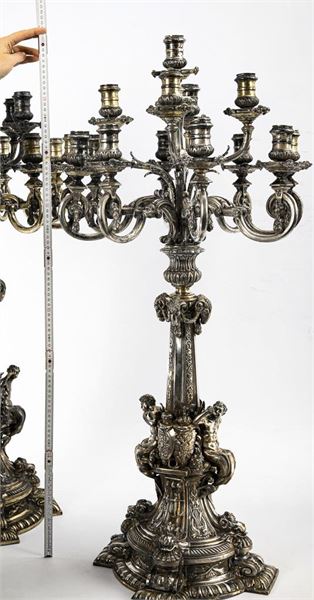
MATERIAL: sterling silver. H 101 / 102 cm. Approx. 17.05 kg and 17.3 kg.
ESTIMATED VALUE: 65,000–150,000 EUR.
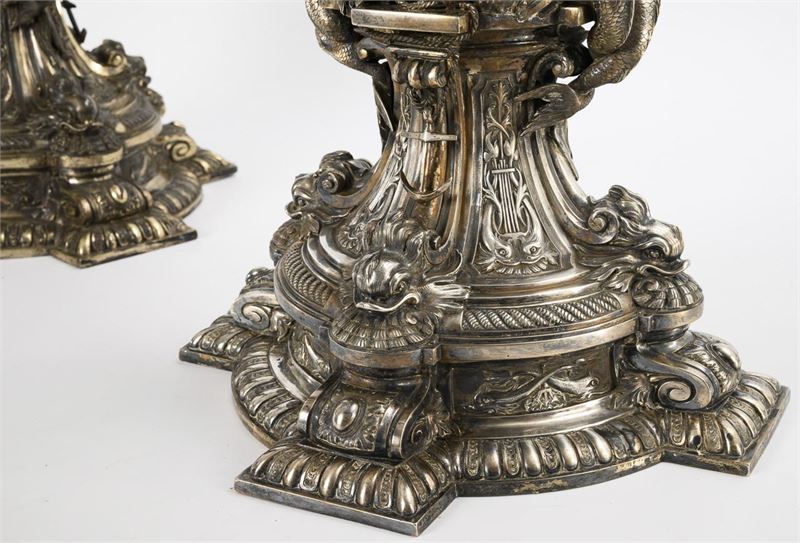
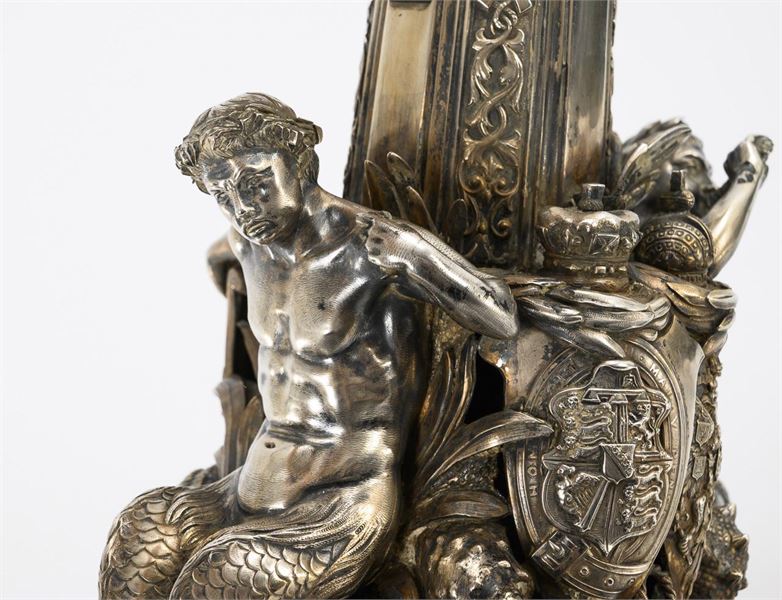
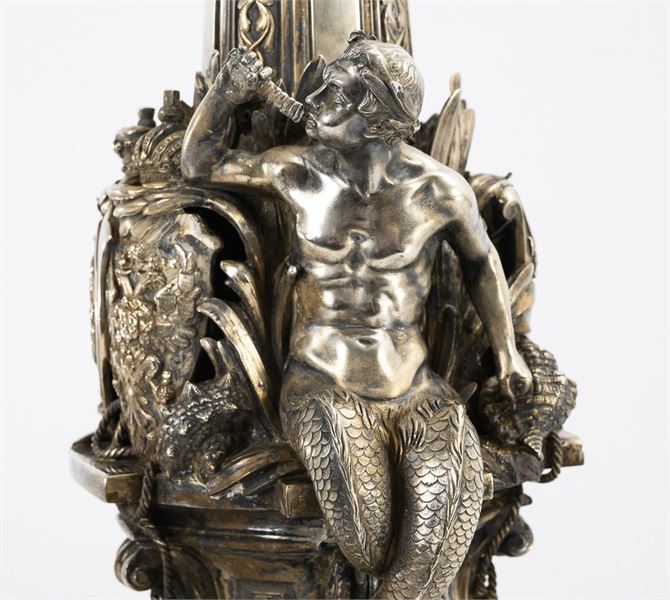
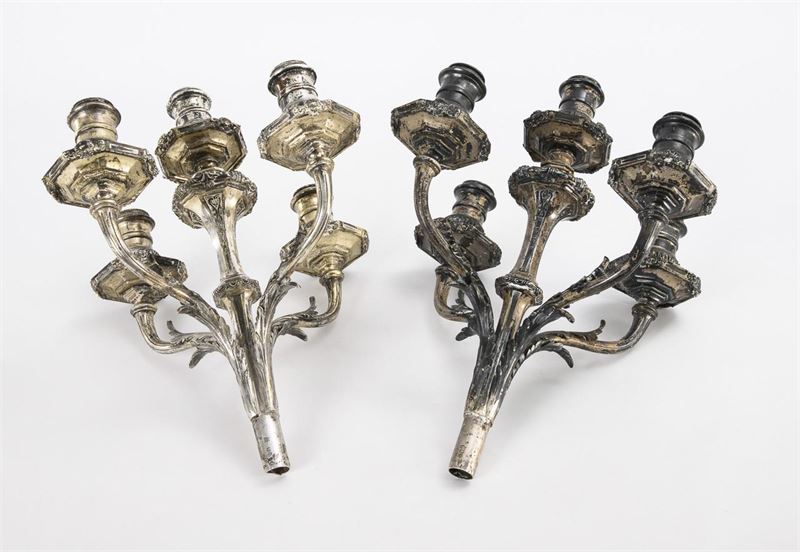
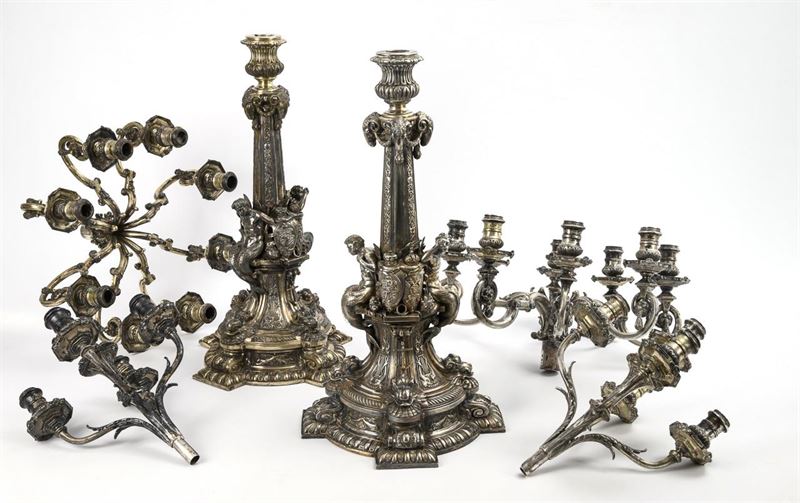
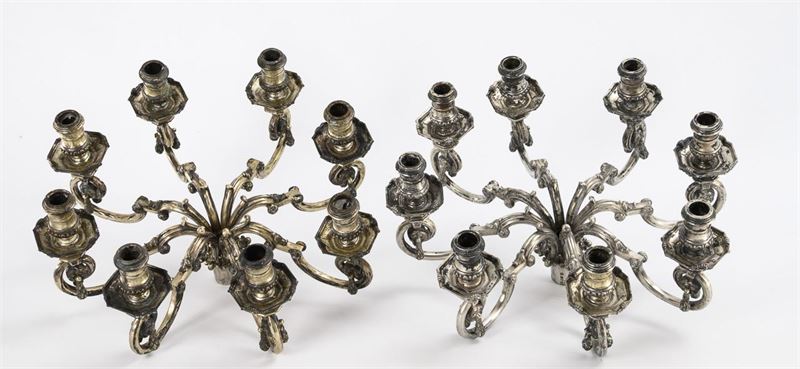
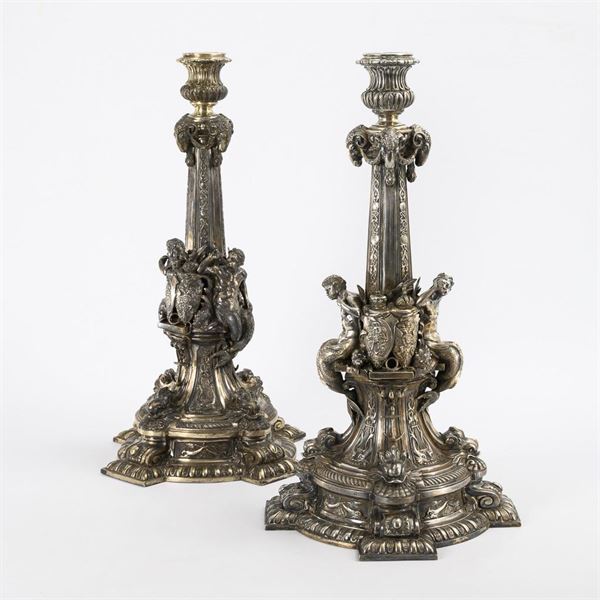
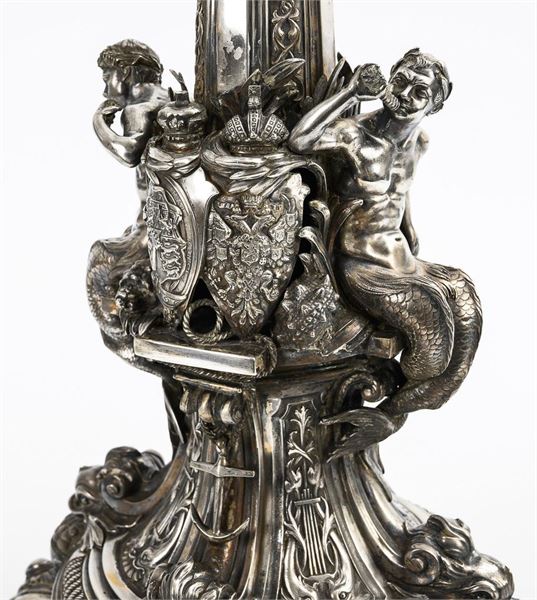
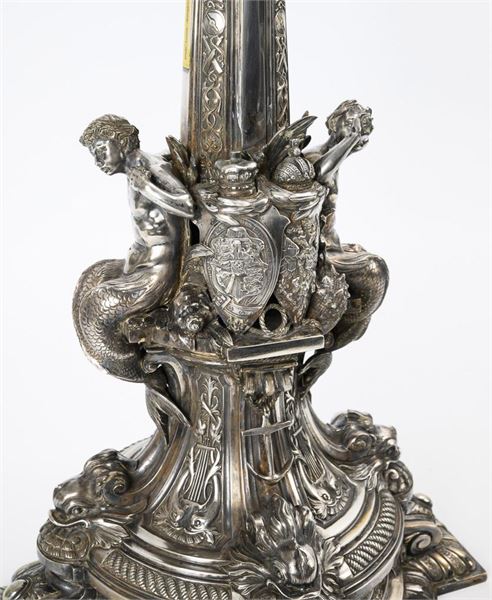
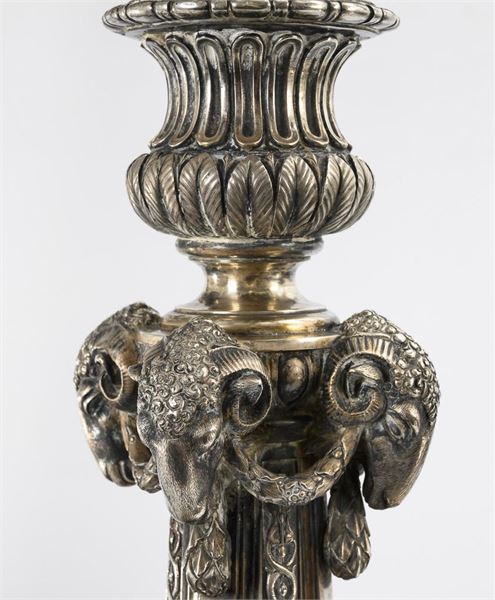
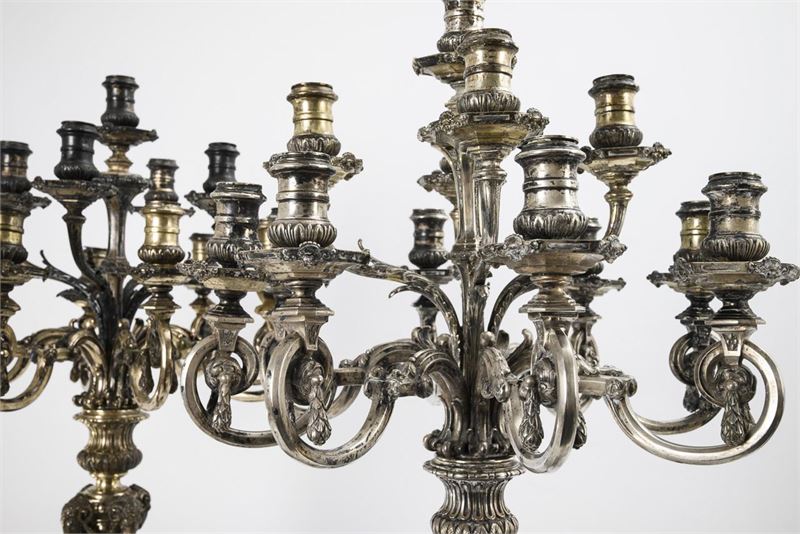
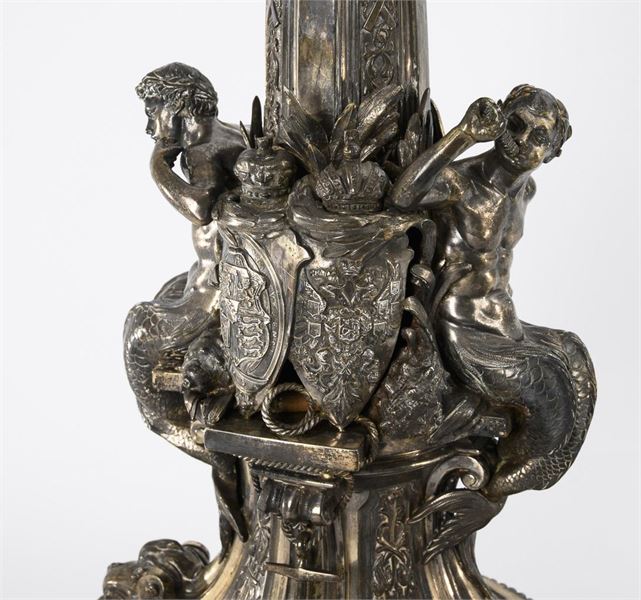
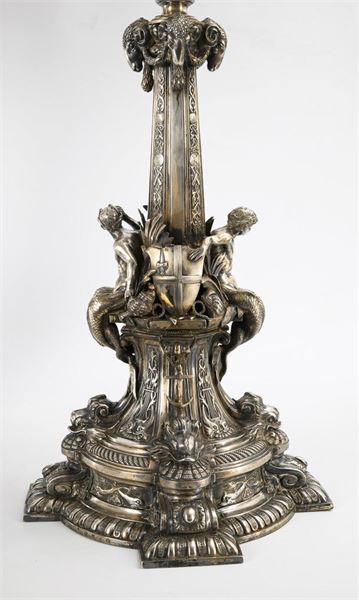
DESCRIPTION: The monumental, 13-flame silver candelabras are richly decorated with leaf reliefs, ram’s heads, and sea creatures. Each bears the coat of arms of the City of London as well as two additional royal coats of arms that reveal the history of these monumental one-of-a-kind pieces: that of Alfred, Duke of Edinburgh (1844–1900), second son of Queen Victoria and Prince Consort Albert of Saxe-Coburg and Gotha, later Duke of Saxe-Coburg and Gotha, with the Order of the Garter and the royal crown; and the small state coat of arms of the Russian Empire with the chain of the Order of St. Andrew the First-Called and the imperial crown. This pair of candelabra was a gift from the Corporation of the City of London on the occasion of the wedding of the Duke of Edinburgh to Grand Duchess Maria Alexandrovna (1853–1920), daughter of Tsar Alexander II of Russia. The marriage of the British prince to the Grand Duchess took place on January 23, 1874, at the Winter Palace in St. Petersburg. CLASSIFICATION AND SIGNIFICANCE: The historical account and accompanying illustration in the *Illustrated London News* of May 22, 1875, confirm that the complete wedding gift included, in addition to the candelabras, a large, elaborately designed table centerpiece. The workmanship, design, hallmarks, and quality of the pieces correspond both with one another and with the aforementioned historical woodcut illustration. The table centerpiece bears the inscription: “PRESENTED BY THE CORPORATION IN MANIFESTATION OF THE DEEP GRATIFICATION WITH WHICH THE CITIZENS OF LONDON REGARD THE UNION OF HIS ROYAL HIGHNESS THE DUKE OF EDINBURGH K.G. WITH THE IMPERIAL HIGHNESS THE GRAND DUCHESS MARIE ALEXANDROVNA OF RUSSIA, MARCH 12, 1874,” and was sold at Christie’s auction house in New York in October 2019 for $350,000. The set was commissioned to commemorate the royal wedding and was presented to the newlyweds at an honorary luncheon at Mansion House, hosted by the LordMayor and Mayoress of London, along with prominent members of the Corporation of the City of London, on May 11, 1875. The ensemble served as a striking tribute to the political alliance between England and Russia forged through the marriage of Alfred and Maria. Grand Duchess Maria Alexandrovna of Russia remained the only Romanov to marry into the British royal family. After Alfred assumed the title of Duke of Saxe-Coburg and Gotha, she led an active social and cultural life in Germany. Even after his death in 1900, she continued to live in Coburg until the effects of World War I and the Russian Revolution forced her into exile in Switzerland following the dissolution of the duchy, where she died in 1920. EXECUTION: Court jeweler Garrard & Co is a historic London jewelry house founded in 1722 by silversmith George Wickes (1698–1761), who later became a purveyor to Frederick, the Prince of Wales. Robert Garrard joined the company in 1792, followed later by his son, Robert Garrard II. In 1843, Garrard was appointed court jeweler by Queen Victoria, responsible for the care and production of the Crown Jewels (the company held this position until 2007); this commission led to further work and commissions for the royal family. It is highly likely that the candelabras, like the table centerpiece, were designed by Henry Hugh Armstead, who specialized in sculptural work and, among other things, designed the sculptural decorations for the Colonial Office in Whitehall as well as the tomb forBishop Wilberforce in Winchester Cathedral. In 1879, he was elected a member of the Royal Academy and taught at its institutes until shortly before his death. CONDITION: The horns of the sea creatures, a few leaves, one end of the garland featuring the ram’s heads, and the finials of the London coats of arms are missing; wax residue in the sockets; signs of wear.
DESCRIPTION: The monumental, 13-flame silver candelabras are richly decorated with leaf reliefs, ram’s heads, and sea creatures. Each bears the coat of arms of the City of London as well as two additional royal coats of arms that reveal the history of these monumental one-of-a-kind pieces: that of Alfred, Duke of Edinburgh (1844–1900), second son of Queen Victoria and Prince Consort Albert of Saxe-Coburg and Gotha, later Duke of Saxe-Coburg and Gotha, with the Order of the Garter and the royal crown; and the small state coat of arms of the Russian Empire with the chain of the Order of St. Andrew the First-Called and the imperial crown. This pair of candelabra was a gift from the Corporation of the City of London on the occasion of the wedding of the Duke of Edinburgh to Grand Duchess Maria Alexandrovna (1853–1920), daughter of Tsar Alexander II of Russia. The marriage of the British prince to the Grand Duchess took place on January 23, 1874, at the Winter Palace in St. Petersburg. CLASSIFICATION AND SIGNIFICANCE: The historical account and accompanying illustration in the *Illustrated London News* of May 22, 1875, confirm that the complete wedding gift included, in addition to the candelabras, a large, elaborately designed table centerpiece. The workmanship, design, hallmarks, and quality of the pieces correspond both with one another and with the aforementioned historical woodcut illustration. The table centerpiece bears the inscription: “PRESENTED BY THE CORPORATION IN MANIFESTATION OF THE DEEP GRATIFICATION WITH WHICH THE CITIZENS OF LONDON REGARD THE UNION OF HIS ROYAL HIGHNESS THE DUKE OF EDINBURGH K.G. WITH THE IMPERIAL HIGHNESS THE GRAND DUCHESS MARIE ALEXANDROVNA OF RUSSIA, MARCH 12, 1874,” and was sold at Christie’s auction house in New York in October 2019 for $350,000. The set was commissioned to commemorate the royal wedding and was presented to the newlyweds at an honorary luncheon at Mansion House, hosted by the LordMayor and Mayoress of London, along with prominent members of the Corporation of the City of London, on May 11, 1875. The ensemble served as a striking tribute to the political alliance between England and Russia forged through the marriage of Alfred and Maria. Grand Duchess Maria Alexandrovna of Russia remained the only Romanov to marry into the British royal family. After Alfred assumed the title of Duke of Saxe-Coburg and Gotha, she led an active social and cultural life in Germany. Even after his death in 1900, she continued to live in Coburg until the effects of World War I and the Russian Revolution forced her into exile in Switzerland following the dissolution of the duchy, where she died in 1920. EXECUTION: Court jeweler Garrard & Co is a historic London jewelry house founded in 1722 by silversmith George Wickes (1698–1761), who later became a purveyor to Frederick, the Prince of Wales. Robert Garrard joined the company in 1792, followed later by his son, Robert Garrard II. In 1843, Garrard was appointed court jeweler by Queen Victoria, responsible for the care and production of the Crown Jewels (the company held this position until 2007); this commission led to further work and commissions for the royal family. It is highly likely that the candelabras, like the table centerpiece, were designed by Henry Hugh Armstead, who specialized in sculptural work and, among other things, designed the sculptural decorations for the Colonial Office in Whitehall as well as the tomb forBishop Wilberforce in Winchester Cathedral. In 1879, he was elected a member of the Royal Academy and taught at its institutes until shortly before his death. CONDITION: The horns of the sea creatures, a few leaves, one end of the garland featuring the ram’s heads, and the finials of the London coats of arms are missing; wax residue in the sockets; signs of wear.
The candelabras are accompanied by a copy of the book Villa and Park Bergfried in Saalfeld/Saale. The Eventful History from 1924 to 2024 by the Friends of Bergfried e. V., which features photographs of the villa’s interior showing the two candelabras. All lots with a reserve (starting price) of at least 2,000€ will be cross-checked against the Art Loss Register database.
Reference: The Illustrated London News, “Duke and Duchess of Edinburgh,” May 22, 1875, p. 493 Christie’s: “A Royal Victorian Silver Centerpiece on Plateau,” https://www.christies.com/en/lot/lot-6229106.
Provenance: Restituted in June 2026 to the heirs of the former chocolate manufacturer Dr. Ernst Hüther (Villa Bergfried, Saalfeld). The candelabras had been at Villa Bergfried in Saalfeld since at least 1929 (as evidenced by photographs). After the Hüther family was expropriated in the Soviet Occupation Zone, the candelabras remained on the inventory of the villa, which was being used as a sanatorium (see inventory labels), and were kept in the storage facility of the Heidecksburg Castle Museum after German reunification until theirto the heirs, they were kept in the storage facility of the Heidecksburg Castle Museum. Given the Hüther family’s documented connection to the House of Saxe-Coburg and Gotha, it seems likely that the candelabras were sold directly to the family during the turbulent times of political upheaval surrounding World War I. This is likely the first time these candelabras have appeared on the open art market. The last residents of the villa were unaware of the chandeliers’ royal provenance, which is why they were previously considered lost.
For this lot, we recommend personal pickup, fine art transport, or shipping via ThePackengers.
Call time is Oct. 30, 2026 | estimated at 6:08 p.m. (CET)
Limit 65000 €
• LIVE Auction starts in 8 days
• Calling time: 30. | Oct 2026 | approximately 18:08 uhr
Log in
• Calling time: 30. | Oct 2026 | approximately 18:08 uhr
International shipping quote
Non-binding estimate by our partner ThePackengers. Not applicable to shipments within Germany (shipped by us via DHL). Terms: www.thepackengers.com